

What Is a Hopper Loader? A Practical Guide for Injection Moulding, Extrusion & Manufacturing
Material handling plays a major role in the efficiency of any injection moulding operation. If plastic pellets are not consistently supplied to the machine, production stops. This is where hopper loaders become essential.
But what exactly is a hopper loader, how does it work, and what different material feeding systems are available in plastics processing?
What Is a Hopper Loader?
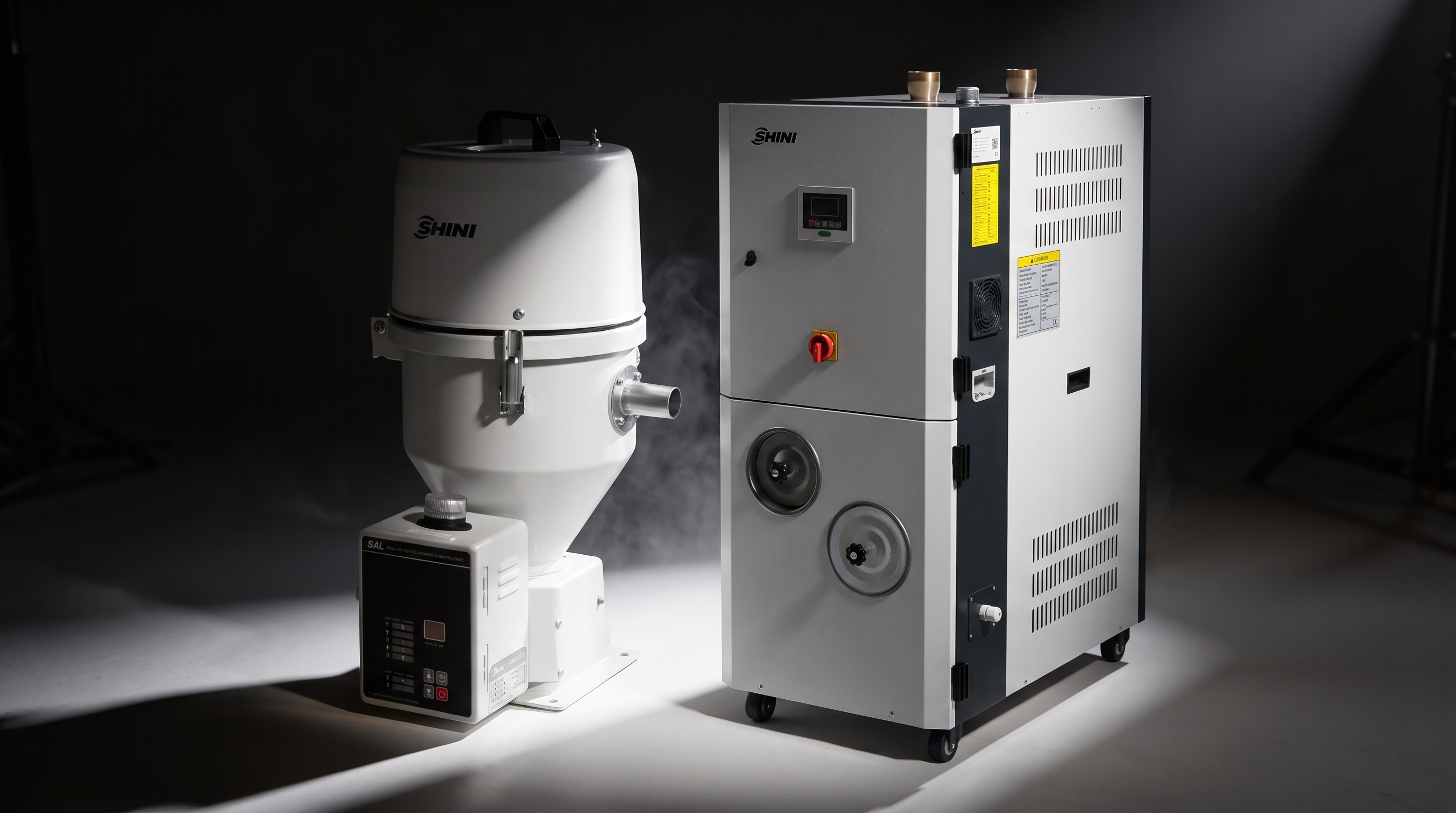
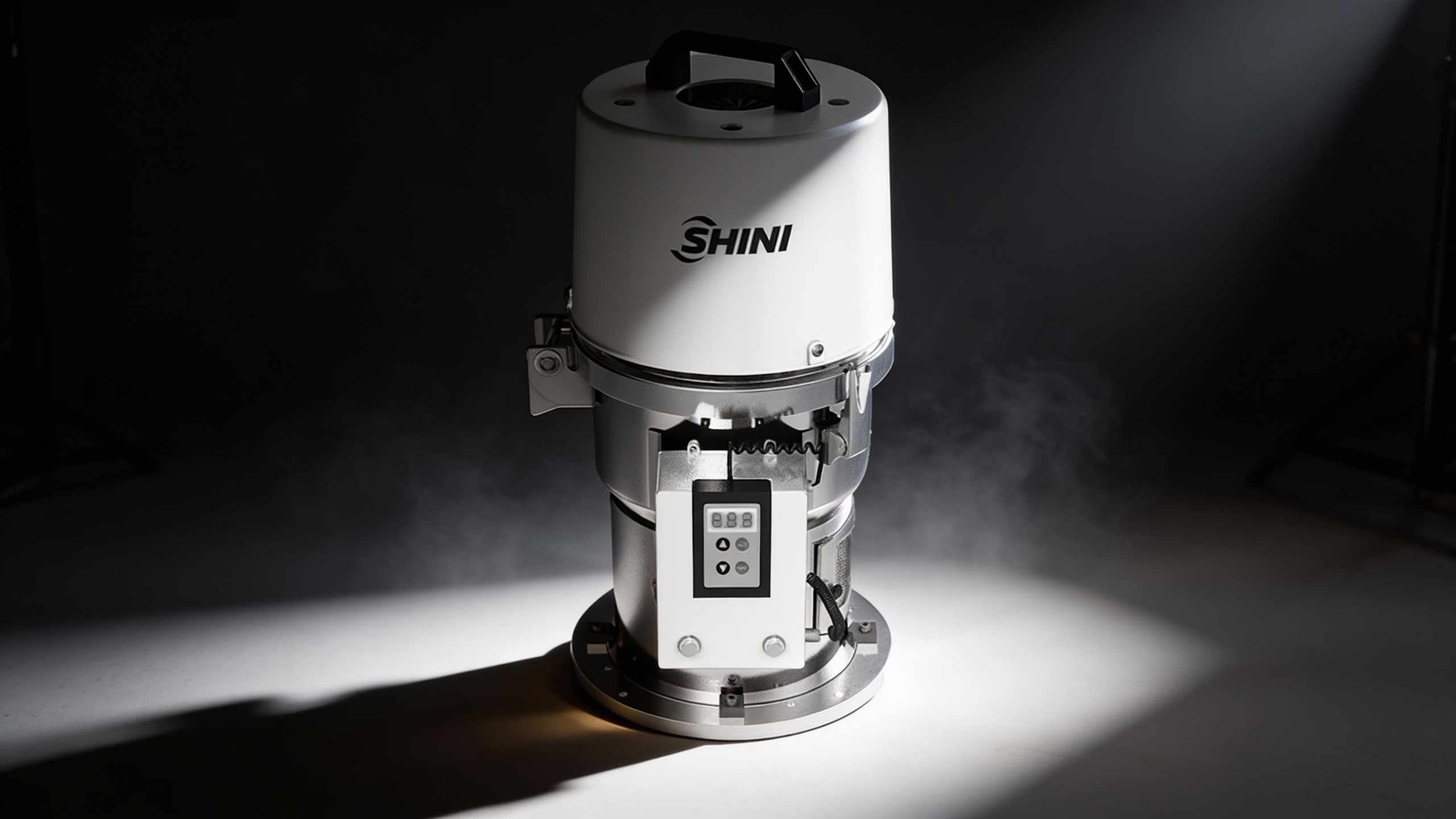
A hopper loader is a device used to automatically transfer plastic pellets or granules from a storage container to the hopper of an injection moulding machine.
Instead of operators manually pouring material into the machine, the hopper loader uses vacuum suction to pull material through a hose and deposit it into the machine hopper.
This automated process keeps machines continuously supplied with material while reducing manual handling.
How Does a Hopper Loader Work?
Although designs vary slightly, most hopper loaders follow the same operating cycle.
- First, a vacuum source creates suction inside the loader.
- Plastic pellets are then drawn through a conveying hose from a material container such as a bag or bulk storage bin.
- The material enters the loader where filters separate the pellets from the air.
- The pellets then drop into the machine hopper.
Once the hopper reaches the correct level, the system pauses until more material is required. The cycle then repeats automatically throughout production.
Why Do Injection Moulders Use Hopper Loaders?
Many plastics processing facilities rely on hopper loaders because they improve both productivity and process consistency.
Automated material feeding offers several advantages:
- Machines remain supplied with material, reducing the risk of production interruptions.
- Operators spend less time manually filling hoppers.
- Closed conveying systems reduce pellet spillage and dust.
- Material supply remains more consistent throughout the process.
For many moulding facilities, hopper loaders are one of the simplest ways to improve production efficiency.
What Types of Hopper Loaders Are Used in Injection Moulding?
There are several types of hopper loaders and material feeding systems used across plastics processing. The right solution depends on factory size, conveying distance, and the level of automation required.
Self Contained Hopper Loaders
Compact loaders with a built in vacuum motor.
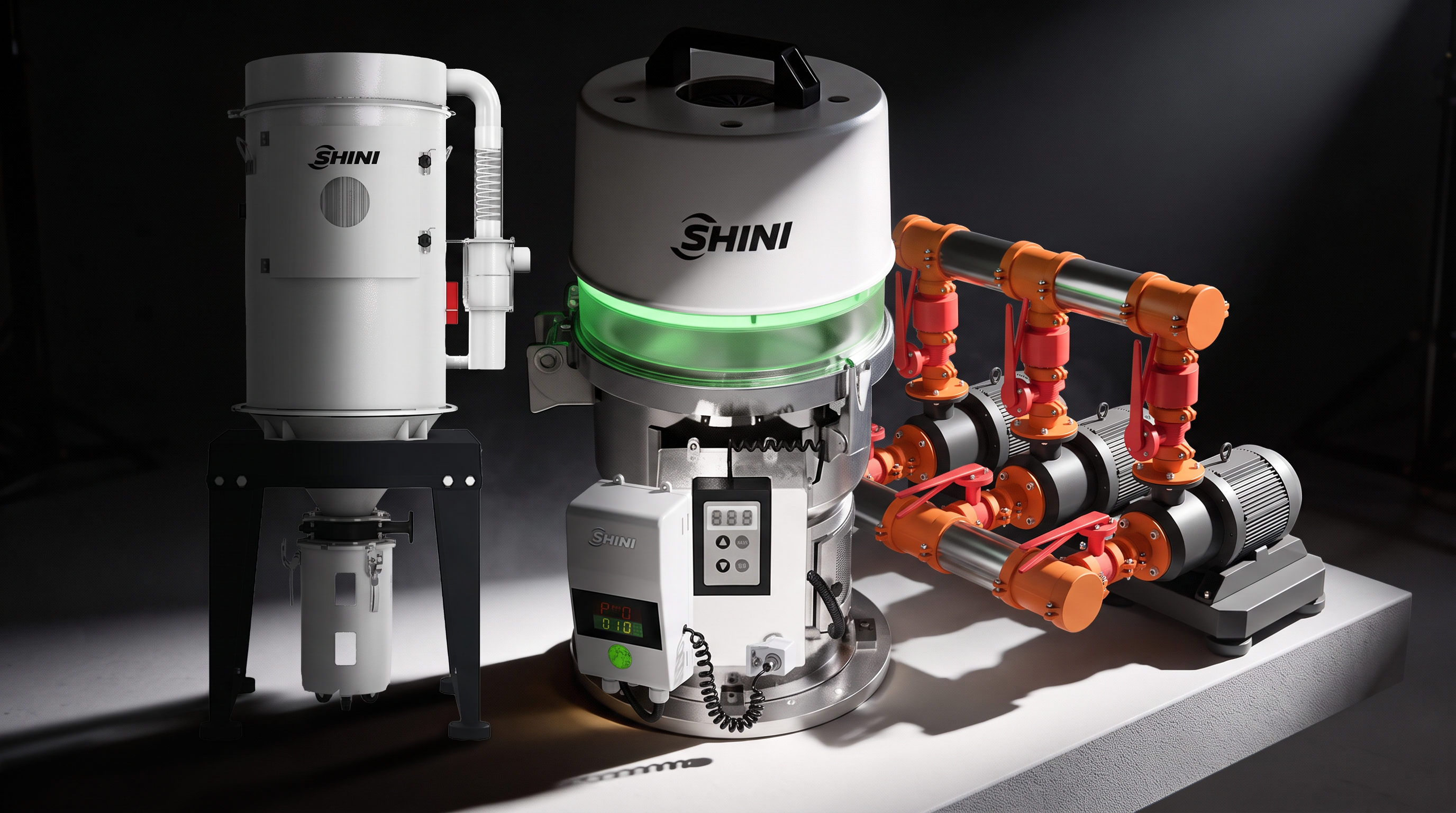
These units sit directly on top of the injection moulding machine and pull material from a nearby container. Because the vacuum motor is integrated into the unit, they are simple to install and are typically used for short conveying distances or single machine setups.
Separate Vacuum Hopper Loaders
Receiver loaders connected to a central vacuum system.
Instead of having their own motor, these loaders rely on a central vacuum pump that supplies suction to multiple machines. This setup is common in larger moulding facilities where one vacuum source feeds several machines across the factory floor.
Proportional Hopper Loaders
Loaders designed to convey two materials at controlled ratios.
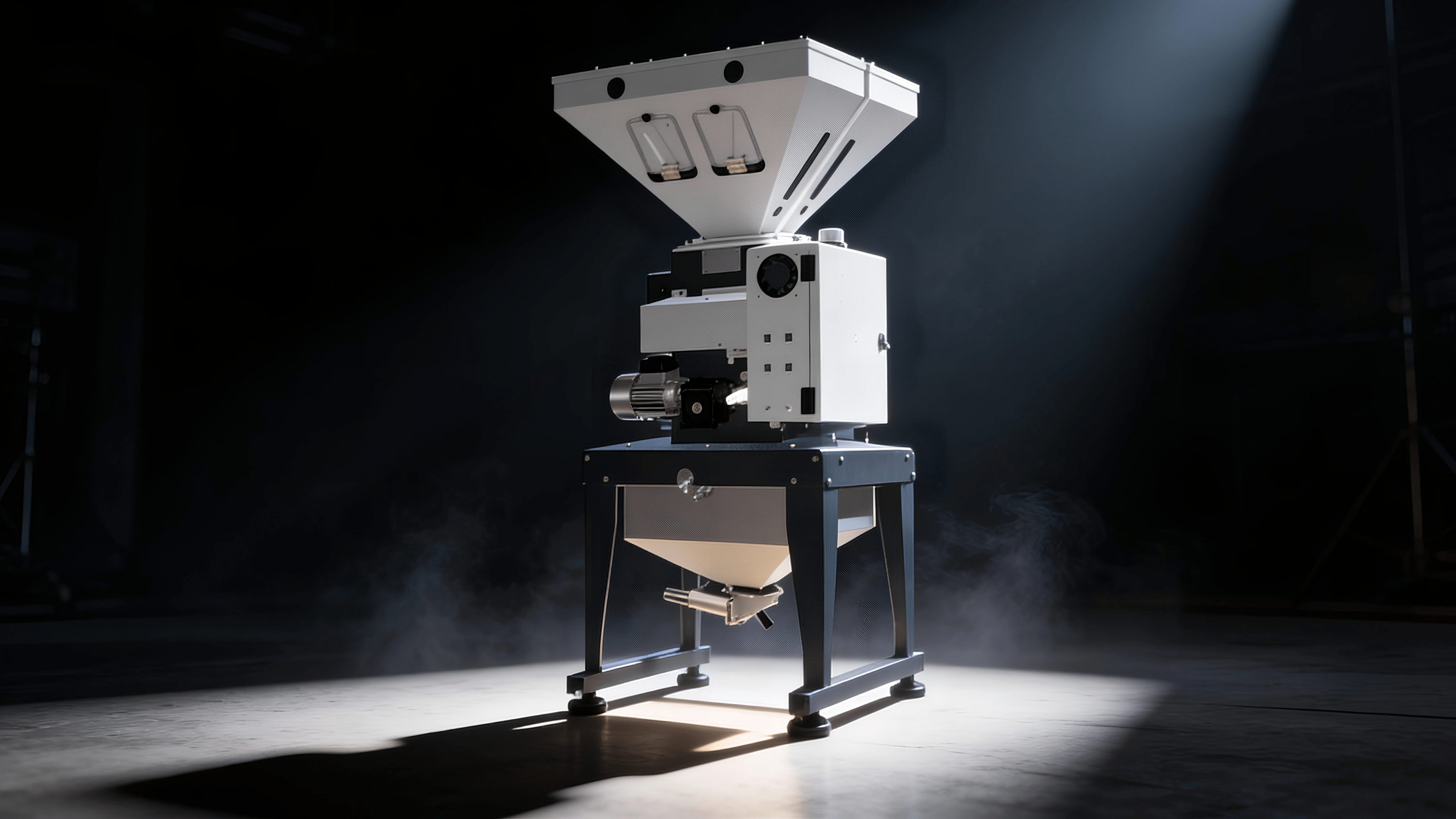
Proportional loaders allow virgin material and regrind to be pulled from separate sources during the loading cycle. This enables manufacturers to introduce regrind into the process while maintaining consistent material ratios.
Venturi Loaders
Material loaders powered by compressed air.
Venturi systems create vacuum using compressed air rather than an electric motor. They are simple, compact, and contain fewer moving parts, but they are generally best suited to short conveying distances and smaller material volumes.
Flexible Screw Feeders
Mechanical feeders that move material using a rotating auger.
A flexible screw inside a tube pushes plastic pellets or powders from the material container to the machine hopper. These systems are commonly used when conveying powders, regrind, or materials that may not move easily through vacuum conveying systems.
Centralised Material Conveying Systems
Factory wide systems that distribute material to multiple machines.
In highly automated facilities, materials are stored in central silos or bulk containers and distributed across the plant through vacuum conveying networks. Individual machines receive material through hopper loaders connected to this central system.
How Do You Choose the Right Material Feeding System?
The best solution depends on several factors within the production environment.
Key considerations include:
- Material type and bulk density
- Conveying distance
- Machine throughput requirements
- Factory layout
- Level of automation required
For many injection moulding operations, vacuum hopper loaders provide the most efficient and reliable feeding solution. However, alternative systems such as venturi loaders or flexible screw feeders can offer advantages in certain applications.
Why Are Hopper Loaders Important in Modern Moulding?
As injection moulding facilities become more automated, reliable material handling becomes increasingly important.
Hopper loaders help ensure machines receive a consistent supply of plastic material without manual intervention. This improves production efficiency, reduces downtime, and supports consistent part quality.
Whether used as standalone units or as part of a centralised material handling system, hopper loaders remain one of the most widely used and essential ancillary devices in plastics processing.